

マイクログリッドコントローラで運用コストを最小限に
一体型マイクログリッドコントローラを備えた Ovation™ 制御システムに基づいて構築されたエマソンのマイクログリッド制御ソリューションは、マイクログリッドの分散型エネルギー資産を管理し、グリッドの安定性と運用上の回復力を維持しながら、低炭素電力の生産において高いコスト効率を実現します。
これにより、すべてのマイクログリッドコンポーネントとマクログリッド相互接続の制御が効率的に自動化され、電力需要を満たし、最小限の運用スタッフで安定した動作条件を維持します。

信頼性が高く持続可能なグリッド
エマソンの持続可能なグリッドソリューションは、予測不可能な再生可能エネルギーを予測可能で信頼性の高い電力に変換します。 リアルタイムの需要予測、運用の可視化と分析により、意思決定がより簡単で正確になります。 再生可能エネルギー源を、従来のエネルギーミックスにシームレスに組み込んだことで、発電から送電までの効率性の最大化が実現しました。

マイクログリッド制御アプリケーション

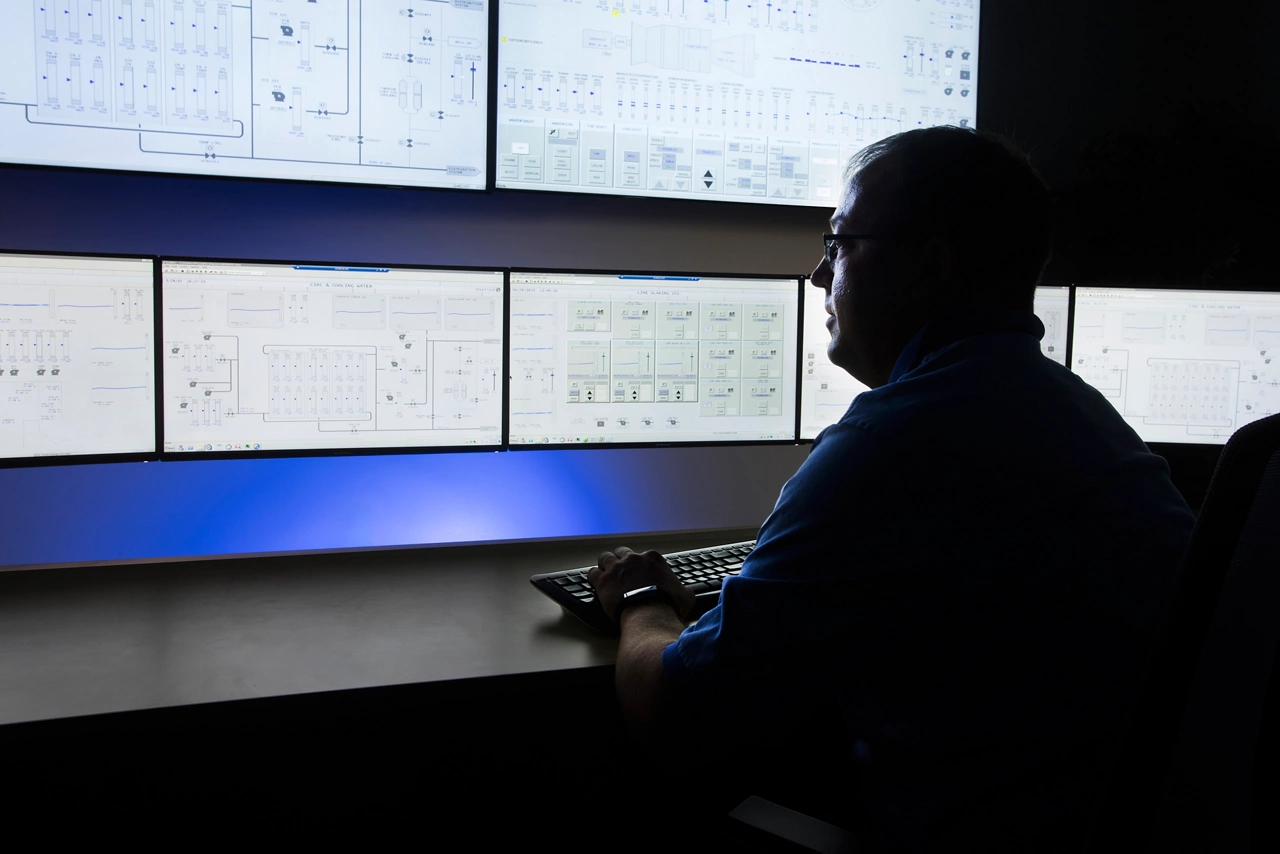
Ovation マイクログリッド制御システムには、標準的な統合機能で構成される包括的なマイクログリッドマネージャーが用意されています。 これには、リアルタイム監視用のデータ収集と、システムを可視化するプロセスグラフィックスが含まれており、 アラーム管理、データアーカイブ、レポート生成の機能により、詳細な分析と十分な情報に基づいた意思決定が可能です。 これらの機能は、組み込みのエネルギー管理アプリケーションおよび電気制御アプリケーションとシームレスに統合されています。
マイクログリッド用途:ミッションクリティカルな電力 & データセンター
共通結合点の管理から複雑な分散型エネルギーリソース(DER)の調整まで、Ovation マイクログリッド制御は、ミッションクリティカルな環境向けに構築されています。 これらの機能が当社の専用 データセンターエネルギー管理ソリューションでどのように導入されているかをご覧いただくか、以下のフレームワークガイドでシステムの仕組みをご確認ください。
マイクログリッドコントローラおよび制御システムについてのよくある質問
マイクログリッドコントローラは、ローカル発電と電気負荷のバランスを取るためのリアルタイム制御戦略を実行する専用のハードウェアおよびソフトウェアプラットフォームです。 グリッド接続運転または自律的な"アイランドモード" で動作し、このコントローラは、太陽光発電(PV)、風力タービン、バッテリーエネルギー貯蔵システム(BESS)、ディーゼル/ガス発電機など、多様な分散型エネルギーリソース(DER)を動的に制御します。 電圧と周波数の安定性しきい値を厳密に遵守し、共通結合点(PCC)を管理し、マクログリッドの障害発生時にシームレスかつ高速な切り替えを実行することで、電力品質を維持します。
マイクログリッド制御システムは、ヒューマンマシンインターフェース(HMI)、エンジニアリングツール、アラーム管理、履歴データアーカイブ、サイバーセキュリティフレームワークを組み込んだ、個々のコントローラを取り巻く包括的な自動化アーキテクチャです。 パワーアイランド全体を監視・制御する役割を担い、負荷遮断、ブラックスタート復旧、経済負荷配分などの自動シーケンスを調整します。 すべての発電および貯蔵資産間の通信を統合することで、オペレータに一元化された監視環境を提供し、エネルギーコストを削減するとともに、ミッションクリティカルな稼働時間を確保します。
このシステムは、スマートブレーカ、保護リレー、アセットインバータからの高周波データストリームを直接処理することで異常を検出します。 Ovation システムは、リアルタイムの測定値を第一原理に基づく熱力学モデルおよび電気モデルと継続的に比較します。 電圧低下、周波数偏差、または熱異常が事前設定されたしきい値を超えた場合、制御ロジックは、異常が施設の停止に連鎖する前に、1秒未満で自動的に系統分離または負荷遮断シーケンスを実行します。
相互運用性は、多様なマルチベンダープロトコルを統一された制御構造に変換する堅牢な組み込み通信層によって実現されます。 Ovation マイクログリッドコントローラは、ネイティブのデータリンクプロトコルおよび IEC 61850、DNP3、Modbus TCP/IP などの産業標準を活用しています。 これにより、コントローラはサードパーティ製のバッテリー管理システム(BMS)、PV インバータ、インテリジェント電子デバイス(IED)と直接通信し、異なるハードウェアを単一の同期応答ループに統合できます。
オペレータは、リアルタイムのプロセスグラフィックス、ミリ秒単位のタイムスタンプ付きシーケンシャル・イベント・レコーディング(SER)、高度なアラーム管理を組み合わせた統合診断スイートを利用します。 配電故障が発生すると、制御システムはブレーカーのトリップと電力変動の正確なシーケンスを記録します。 これにより、エンジニアリングチームは根本原因分析を行い、外部グリッドの過渡現象と内部コンポーネントの故障を区別し、安全にシステムを復旧できます。
選択には、プラットフォームの決定論的な速度と拡張性を、データセンターの厳格な信頼性目標(99.99% の可用性など)に適合させる必要があります。 実行可能なデータセンター向けマイクログリッドソリューションは、サブサイクルでの障害応答、シームレスな N+Z アイランド移行、およびパワーアイランドセグメントの増設に応じて拡張できる能力を提供する必要があります。 このプラットフォームは、電気制御(ブレーカ・開閉装置)とエネルギー管理(BESS・発電最適化)を単一の冗長制御プロセッサにネイティブに統合し、システム間の遅延を排除する必要があります。
このアーキテクチャはスプリットホライズンアプローチに基づいています。高レベルの最適化プラットフォーム(AspenTech マイクログリッド管理システムなど)がマクログリッドの電力価格、燃料コスト、天気予報を処理し、24時間の最適なディスパッチ戦略を決定します。 基盤となるマイクログリッド制御システムは、これらの戦略的目標を受信し、それらをリアルタイムの運用コマンドに変換します。これにより、瞬間的な負荷変動に合わせて発電機の出力と BESS 充電/放電サイクルを安全に調整します。
ビデオ & ニュース

Ovation は、マイクログリッドの信頼性の高い運用を保証します
テキサス大学におけるリアルタイムのマイクログリッド制御

マイクログリッドの制御と監視の概要