
Cutting Through the Complexity of Machinery Analysis
Traditionally, vibration data has not been routed to the control room because it required specialized training and tools to extract any information from the data.
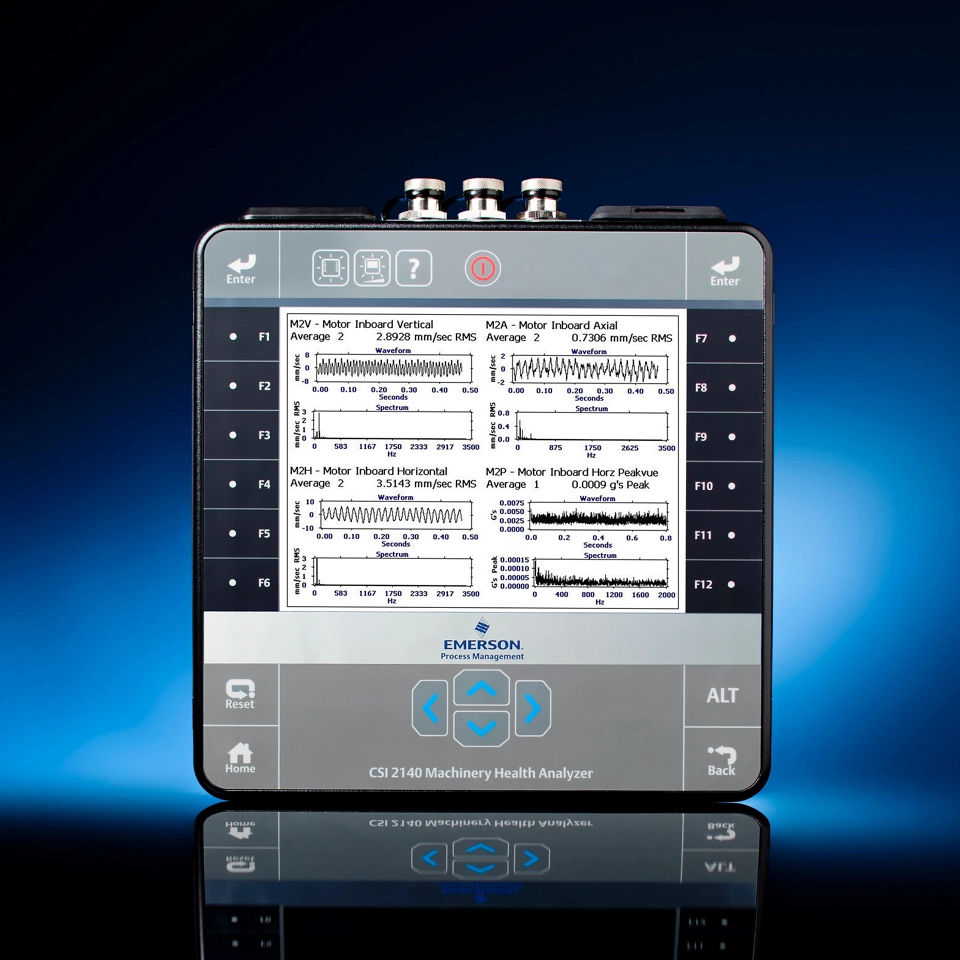
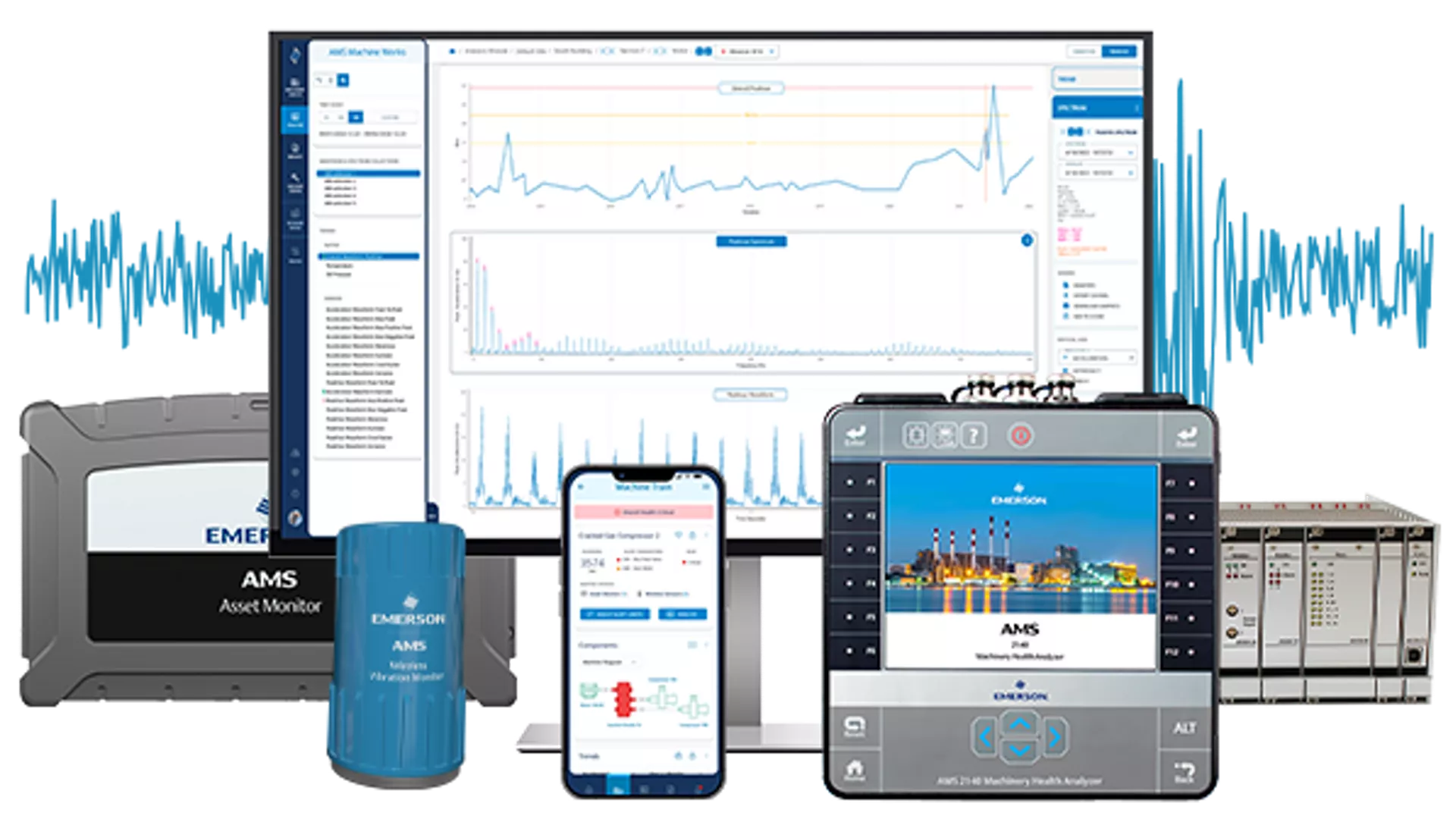
Emerson's PeakVue technology cuts through the complexity of machinery analysis to provide a simple, reliable indication of equipment health via a single trend. PeakVue filters out traditional vibration signals to focus on impacting, a much better indicator of overall asset health on any type of rolling element bearing machine.
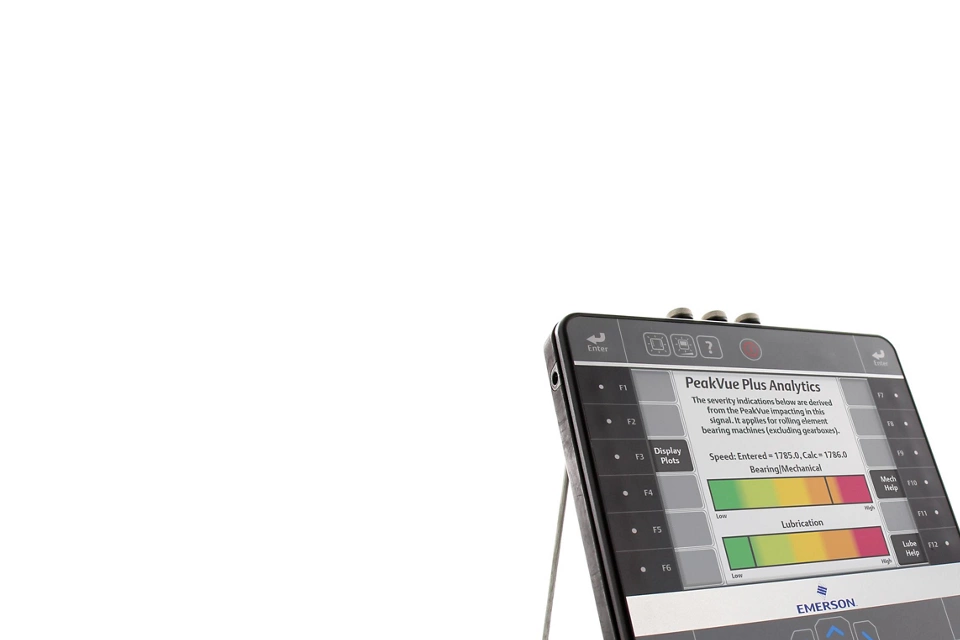
And now, with the introduction of PeakVue Plus, users will find it even easier to take advantage of this technology. Watch the videos below to learn more.
Zero Principle
Uses a simple Rule of 10 scale, with a good machine operating at close to zero
Earliest Indication
Distress signals from impacting are visible before other vibration measurements
East to Interpret
Requires no special training to quickly determine machinery health
How It Works
Baseline of a Good Bearing
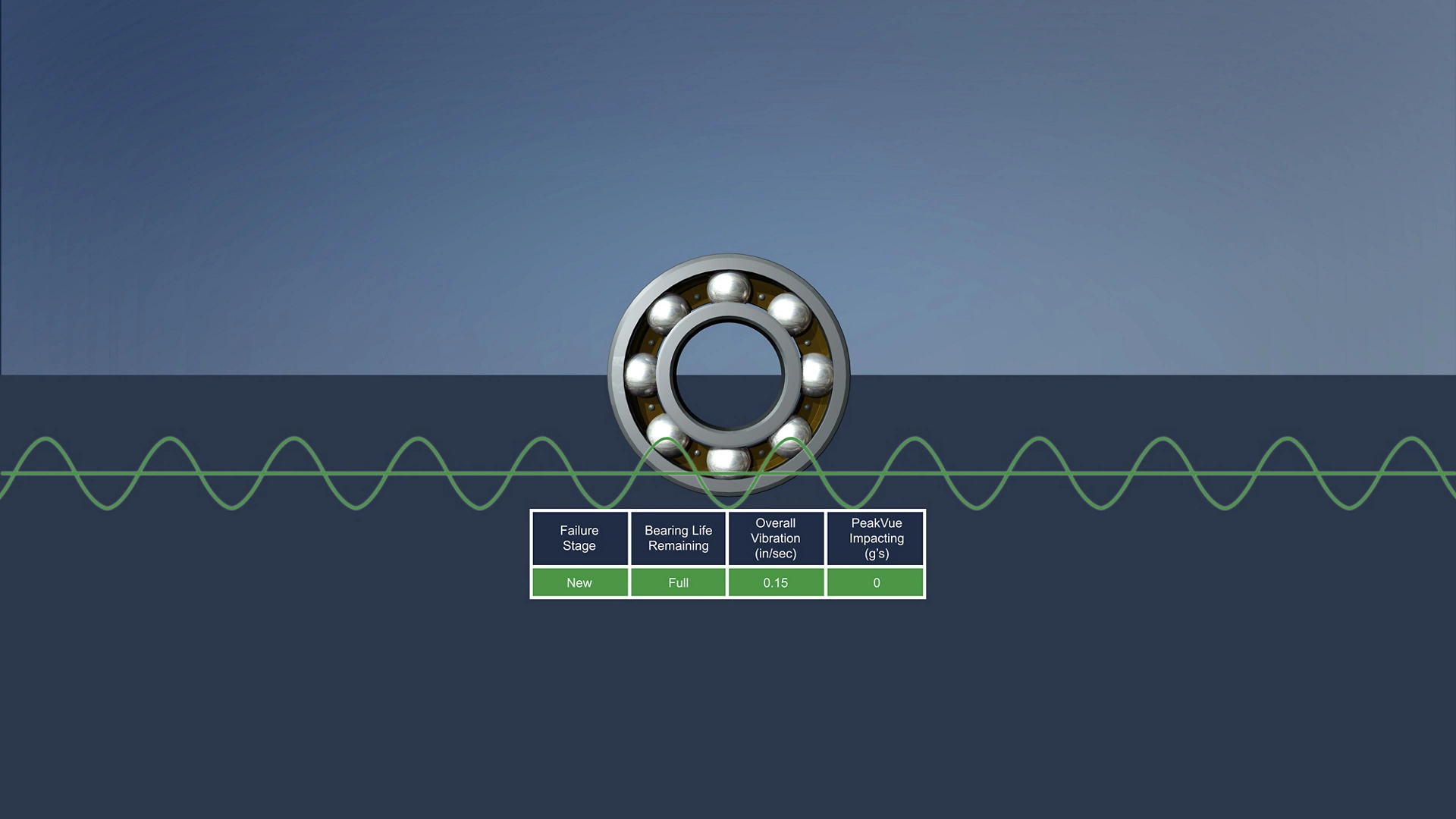
Let’s look at a typical process pump running between 900 and 4,000 RPM as it passes through the four stages of bearing failure. Starting with the baseline condition for a good bearing, we see a significant amount of overall vibration. However, it is important to note that the PeakVue value is at zero. This is because a good machine, properly installed and well lubricated, should not be impacting. Therefore we can state the Zero Principle – PeakVue on a good machine should be at or close to zero.
Stage 1 Failure
At stage 1 bearing failure, initially the defect is not visible to the human eye. There is no change in the overall vibration, but PeakVue already provides an indication that something is happening. When it climbs to a value of 10, there is a problem on the bearing.
Stage 2 Failure
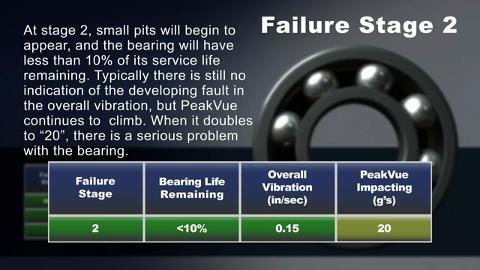
At stage 2, small pits will being to appear, and the bearing will have less than 10% of its service life remaining. Typically there is still not indication of the developing faults in the overall vibration, but PeakVue continues to climb. When it doubles to 20, there is a serious problem with the bearing.
Stage 3 Failure
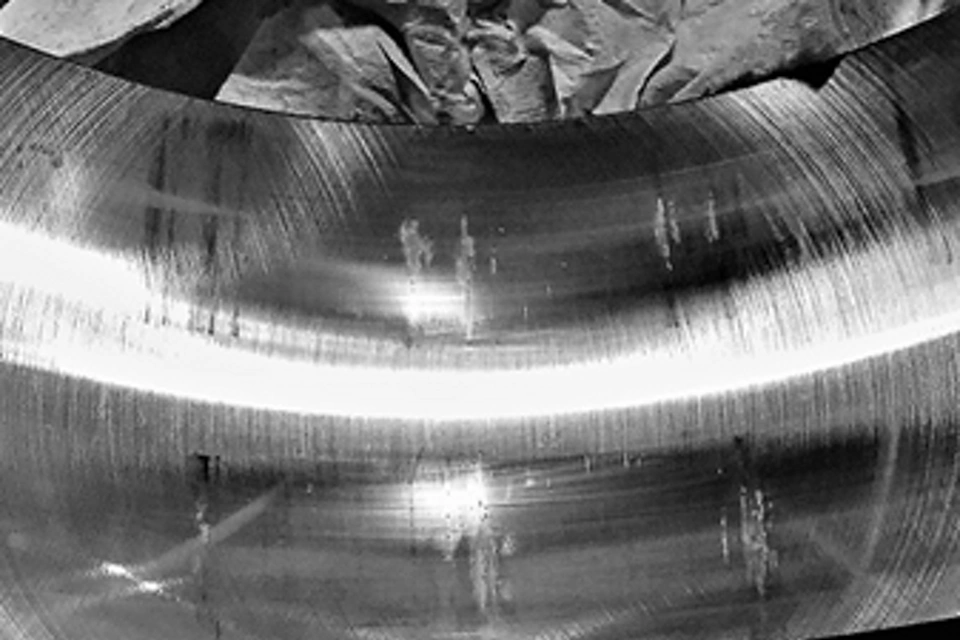
At stage 3, the bearing damage is now clearly visible. You may start to see a small increase in overall vibration of +/- 10%. Meanwhile, PeakVue continues to show the progression in fault severity.
Stage 4 Failure
In the final stage of bearing failure, the overall vibration might rise 20% or more. In comparison, PeakVue continues to increase sharply – perhaps as high as 40 g’s – and signals that the bearing is approaching end of life.
Machine Failure
There will be a marked incrase in the overall vibration at the point of actual failure, but too late for planning. This in in effect notification that the machine is shutting down. In contrast, PeakVue has been indicating a developing fault over the past weeks and months. Immediately prior to failure, PeakVue levels may surge rapidly to 50 g’s or higher.
Featured Videos

PeakVue™ & PeakVue Plus Technology for Machinery Analysis | AMS
Join expert Brian Overton from Emerson's Reliability Solutions business for a short explainer on Emerson's patented PeakVue and PeakVue Plus technology, which provides earlier, more accurate indications of developing faults in rolling element bearing machines.